
Half up half down is one of the few hairstyles that works almost everywhere: a school morning, a wedding, a job interview, a night out. Most guides just show you a gallery of pretty photos. This one goes further. It covers how to actually do the style, what changes depending on your hair type, and the real problems people run into, like tangled hair ties, thin hair that looks thinner, and curls that fall flat in the heat, based on what stylists and real people say in hair and wedding communities.
What Is a Half Up Half Down Hairstyle?
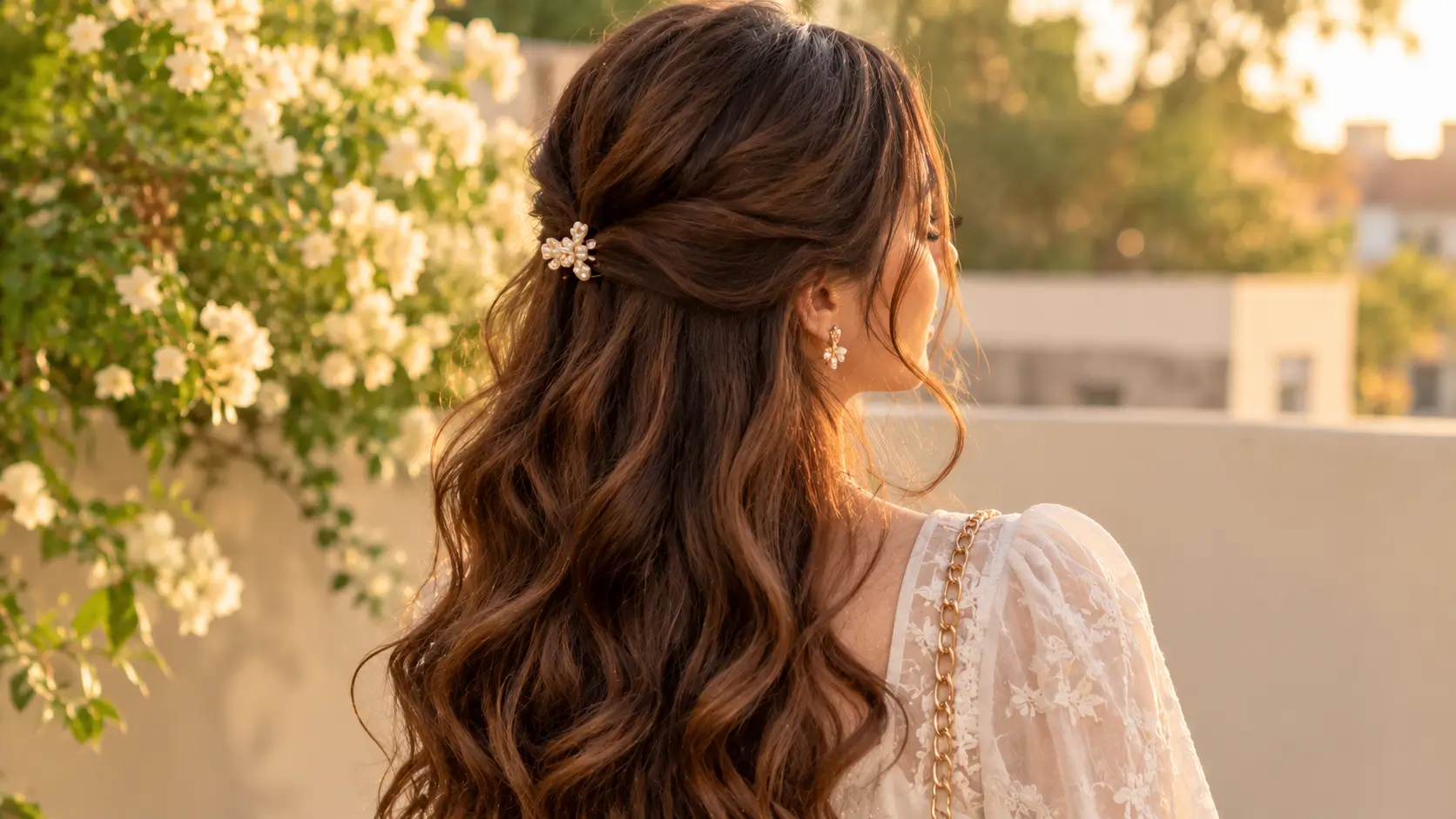
A half up half down hairstyle means the top section of your hair is pulled back and secured (as a ponytail, bun, braid, twist, or clip) while the rest of your hair hangs loose. It keeps hair off your face and adds shape at the crown without committing to a full updo.
That balance is exactly why it’s so popular. One bridal stylist describes it as the go-to option for anyone who feels an updo isn’t “them” but wants something more polished than hair worn fully down.
How to Do a Basic Half Up Half Down (Step by Step)
Most tutorials follow the same simple structure:
- Section your hair. Draw a line from the top of one ear, up over the crown, to the top of the other ear. Everything above that line is your “up” section.
- Smooth and secure. Brush the top section back and tie it with a small elastic, or pin it in place if you prefer to avoid elastics entirely.
- Add volume. Gently pinch and pull at the crown to loosen the hair and create height.
- Hide the band. Wrap a small strand of hair around the elastic for a finished look.
- Finish the lengths. Leave the rest down straight, or curl the ends for a more polished result.
Popular Half Up Half Down Styles
Soft and tousled: Loose, slightly undone waves with a relaxed pulled-back section. This is one of the most requested versions for weddings.
High ponytail version: The top section is secured high and flipped up for bounce and volume. It looks more dramatic and tends to need more hair to look full.
Low ponytail version: A calmer take, with the ponytail left to hang lower, sometimes with small braids added for texture.
Bun version: The top section is twisted into a small bun at the back or crown. It’s the less common choice, which is exactly why it looks unique.
Braided version: One or two braids sweep around the sides and join at the back, adding a soft, boho feel.
Sleek and polished: Uniform waves for a cleaner, modern finish. These look simple but are technically demanding, so allow extra time with a stylist.
Half Up Half Down Hairstyles for Weddings
For Brides
Brides in wedding forums debate the same question again and again: updo or half up? A few honest points come up repeatedly:
- It depends on how well your hair holds curl. Several brides chose an updo specifically because their hair doesn’t hold a curl, or because they overheat easily. Others said a half up style stayed put for hours, even in warm weather.
- Fine hair may need help. Some commenters say half up styles can look like you have less hair, especially on thin hair. A few stylists suggest hair extensions for extra fullness, particularly for high ponytail versions or chunky braids.
- Check the front view. One bride on Reddit shared that she had trouble finding inspiration photos where the front looked good. A useful method she described: take a section from each side near the front, twist slightly, push forward, and clip. Bring front-view photos to your trial, not just back views.
- Plan your accessories. Brides have paired half up styles with veils, combs, tiaras, and hair jewelry. If you’re wearing a veil, discuss placement with your stylist during your trial so the pulled-back section can support it.
For Bridesmaids and Wedding Guests
Half up half down is also one of the most requested styles for bridesmaids, which means bridal parties sometimes end up with matching looks. A bridal stylist advises checking with the bride first so the styles feel coordinated but not identical. For guests, simple versions with soft curls or a small braid usually read as polished without needing a professional.
Older brides and guests also reach for this style. Wedding advice sites note it suits a wide range of lengths and textures while feeling relaxed and elegant.
Half Up Half Down Hairstyles for Black Hair
The half up half down look works across natural hair, braids, extensions, and wigs. What changes is the method and the maintenance.
Natural Hair
Twist-outs, puffs, and slicked ponytails at the crown all work as the “up” part, with the rest left loose and defined. Products that come up again and again in tutorials include edge control and styling gel to smooth the hairline and hold the base of a ponytail. Locs are also part of this conversation: brides with locs have shared ideas such as two French braids with loc petals or a curly half up look.
Braided Versions
Braids in the front that blend into loose curls in the back are a popular pairing, whether done with knotless braids or cornrows feeding into a crown ponytail. The braided section keeps the front neat while the loose portion shows off volume and texture.
Quick Weave
A half up half down quick weave gives you a natural-looking top section from your own hair while extensions provide length and fullness in the back. Details worth knowing before you book or try it yourself:
- Longevity varies. One Reddit user reported a half up half down quick weave lasting around four to five weeks, depending on natural hair growth and how well the glue holds.
- Cost can surprise you. A wedding guest on Reddit said a stylist quoted her £180 for the style, and she declined. Some tutorials promote DIY versions at a much lower cost, but prices depend heavily on the hair used and where you live.
- No-leave-out versions exist. These use a protective cap and careful track placement to blend extensions without leaving natural hair out, and they typically call for a skilled stylist.
- Protect your natural hair. Tutorials emphasize a protective barrier between glue and your own hair. If you’re new to quick weaves, consider booking a professional first.
Half Up Half Down Hairstyles for Curly Hair
Curls tend to hold the “half up” shape well, and a lot of people with curly hair wear it this way regularly. Some points from curly hair communities:
- Avoid harsh parting lines. Some creators suggest using several small claw clips instead of one tight elastic to keep the top section soft.
- Stretch elastics out of the plan. Clips, barrettes, and hair sticks avoid dents and tangles in curls.
- Concern about pulling. Commenters say half up styles pull less than a regular ponytail, and the concern is mostly with slicked-back versions or very heavy hair.
- Heat on part of your hair is fine. Quora answers point out there are no rules against straightening only the “down” section if frizz is your issue.
Half Up Half Down for Straight and Fine Hair
Straight, fine hair is the type most likely to look flat in this style. A few practical tips from stylists and forum users:
- Add texture first. Curl or wave the lengths before pinning the top section so the style holds.
- Add volume at the crown. Lift and loosen the hair as you secure it so the top doesn’t look pulled tight to your scalp.
- Consider extensions or clip-ins for fullness. If you want a chunky braid or high ponytail on fine hair, several stylists suggest this.
- Watch the parting lines. Fine hair can show the scalp where the sections split. Softening the divide with clips or loosening the sections helps.
Half Up Half Down for Short and Medium Hair
This style isn’t limited to long hair. Beauty editors say it works on bobs and lobs, not just long hair, and forums show plenty of short-hair and medium-length variations. For shorter hair, small clips, twisted front sections, and mini buns replace a full ponytail.
How to Wear Half Up Half Down Without Damaging Your Hair
One of the most common complaints in hair communities is that elastic hair ties tangle or mat the hair, sometimes badly enough that people end up cutting them out. Community-tested alternatives include:
- Barrettes for hair that tangles around elastics
- Hair combs that sit flat and hold without twisting
- Claw clips, especially small ones, for a softer look
- Soft, wide bands wrapped loosely instead of tight rubber elastics
- Loosening the hold at the end of the day so the same section isn’t under tension overnight
If your hair is very thick or heavy, avoid securing the top section too tightly or pulling it too high.
Half Up, Updo, or Hair Down: How to Decide
If you’re torn between styles, forum discussions boil the decision down to a few honest factors:
- Does your hair hold curl? If not, a sleeker style or updo may last longer.
- How warm will you be? People who overheat easily often choose full updos.
- How full is your hair? Thick hair handles half up styles easily. Thin hair may need extensions or a different approach.
- What’s the occasion? For casual settings, comfort and ease usually win.
Frequently Asked Questions
What is a half up half down hairstyle?
It’s a style where the top section of your hair is pulled back and secured while the rest hangs loose. The pulled-back section can be a ponytail, bun, braid, twist, or clip.
Does half up half down damage your hair?
Not on its own. Most reported problems come from tight elastic bands that tangle or mat the hair. Barrettes, combs, and claw clips are gentler alternatives, and avoiding tight or slicked-back versions on very heavy hair reduces pulling.
How long does a half up half down quick weave last?
One Reddit user reported around four to five weeks, depending on natural hair growth and how well the glue holds. Results vary by stylist, hair type, and how well it’s maintained.
Can you do half up half down on short hair?
Yes. It works on bobs and lobs, and shorter lengths can use small clips, twisted front sections, or mini buns instead of a full ponytail.
Is half up half down good for thin hair?
It can be, but some people with thin hair say it makes their hair look thinner. Adding curls or waves, lifting the crown, and using extensions or clip-ins can help.
About the Author
Nicola Ebmeyer has spent over nine years in fashion and beauty editorial, covering skincare, aesthetics, and non-surgical treatments for beauty and lifestyle publications before shifting focus to medical aesthetics content. She has interviewed dermatologists and cosmetic injectors extensively and specializes in translating clinical information into clear, honest guides for people considering their first treatment. You can reach Nicola at nicolaebmeyerr@gmail.com.
More from Insight Bullion