
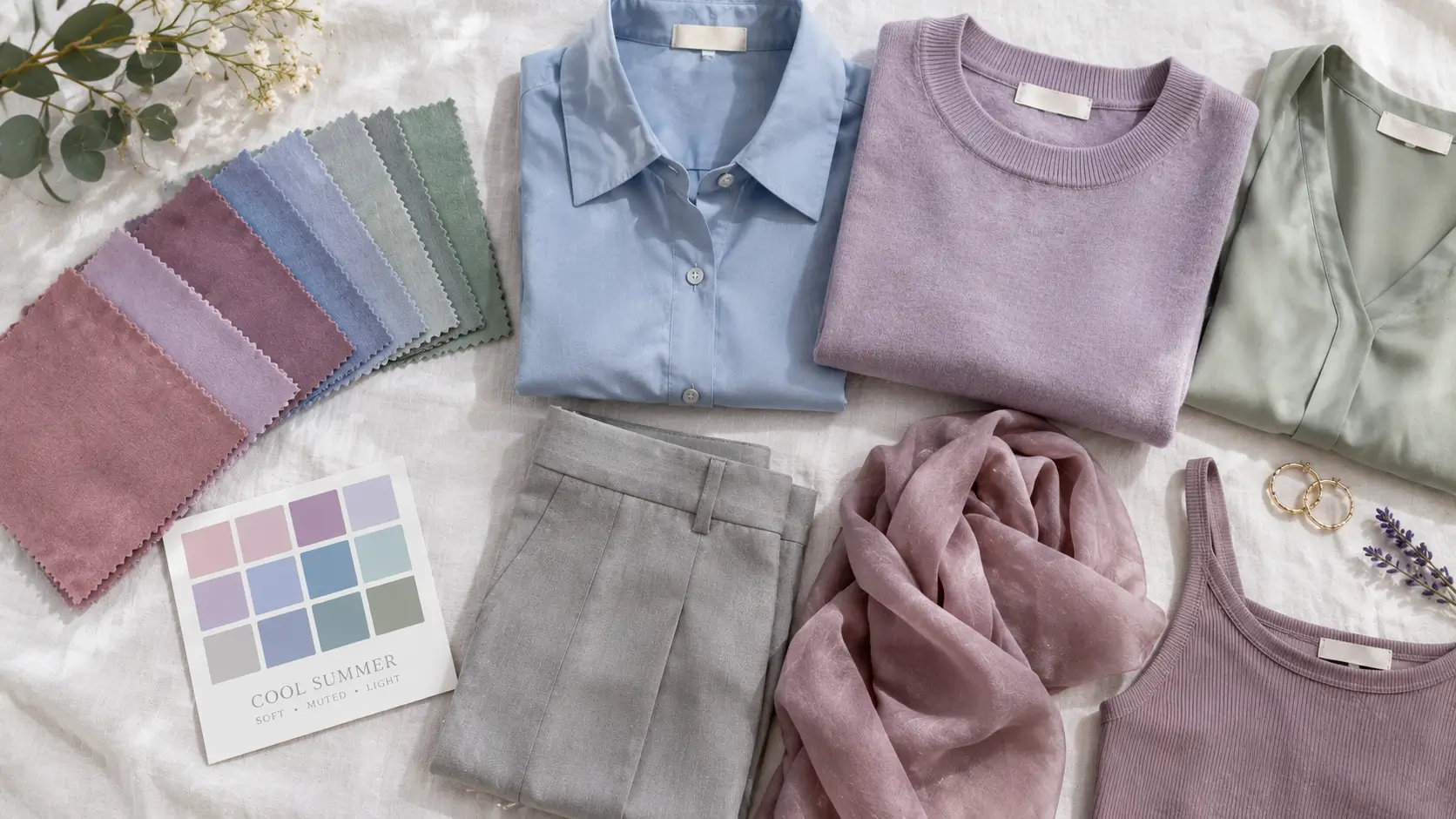
If you’ve searched “cool summer color palette,” you’ve probably also run into “true summer,” “soft summer,” and even “cool winter” used almost interchangeably and that’s not you misunderstanding something, it’s a genuine inconsistency between different color analysis systems. This guide covers what the palette actually is, exactly which colors belong in it, and clears up where the naming confusion comes from so you can shop with confidence.
What Is a Cool Summer Color Palette?
The Cool Summer palette is a cool-toned, low-to-medium contrast color family built around a strong blue undertone. It sits in the Summer season alongside Light Summer and Soft Summer, but leans slightly toward Winter giving it a bit more clarity and crispness than its softer Summer siblings, without tipping into Winter’s high-contrast boldness.
Core characteristics:
- Undertone: Strictly cool a genuine blue base, never yellow or golden
- Saturation: Soft and muted, but with more punch than Light or Soft Summer
- Depth: Light to medium, occasionally handling richer darks like charcoal or deep raspberry
- Contrast: Low to medium between hair, skin, and eyes
Cool Summer vs. Soft Summer, True Summer & Cool Winter — The Naming Confusion Explained
This is where most guides fall short, and it’s also the single most common question in color analysis communities. The confusion comes down to which system you’re using the classic 12-season system or the newer, more granular 16-season system.
In the 12-season system: “Cool Summer” and “True Summer” are treated as exact synonyms in the same, primary Summer palette.
In the 16-season system: They’re split into two distinct sub-seasons. True Summer sits in the exact middle of the Summer family soft, light, and equally balanced between coolness, softness, and lightness. Cool Summer, by contrast, leans specifically toward Cool Winter, meaning it carries more clarity, depth, and brightness than True Summer while staying within Summer’s soft, blended character.
So if a palette you find online is labeled “Cool (True) Summer,” it’s using the 12-season naming convention. If a source treats them as two separate palettes, it’s using the 16-season system and in that case, Cool Summer is the slightly bolder, closer-to-Winter version.
Cool Summer vs. Soft Summer
- Cool Summer retains clarity and crispness saturated cool colors look lively and clear on this palette
- Soft Summer is the most muted and desaturated of all the Summers, with hair, skin, and eyes blending closely in depth
The simplest test: try a saturated cool pink against a dusty, muted mauve-pink. If the bright version looks alive on you, you’re closer to Cool Summer. If the muted version looks effortless and the bright one feels overpowering, you lean Soft Summer.
Cool Summer vs. Cool Winter
- Both are dominantly cool, but Cool Winter is higher contrast and can wear saturated, icy-bright shades
- Cool Summer needs everything softened and muted by comparison a true black or optic white that a Cool Winter wears easily will usually overwhelm a Cool Summer
Cool Summer vs. True Summer
- True Summer is the balanced, “classic” middle of the Summer season equally soft, light, and cool
- Cool Summer pulls slightly toward Winter, so its best colors are a touch clearer and less muted than True Summer’s
Best Colors for Cool Summer
- Blues: Slate blue, powder blue, steel blue, soft aqua, cornflower blue, soft navy
- Pinks & Purples: Icy pink, raspberry, lavender, orchid, softer fuchsia, dusty rose
- Reds: Blue-based reds and clear watermelon red (never anything with an orange or brown base)
- Neutrals: Soft white, rose beige, taupe, charcoal gray, cool medium grays
- Greens: Soft cool greens, seafoam, muted sage (never olive or anything with a golden cast)
Colors to Avoid
- Warm oranges, yellows, mustard, and gold
- Tomato or brick reds
- Any green or brown carrying a yellow or golden undertone
- Stark, jet black or optic white (both read as too harsh against this palette’s softness)
- Neon or hyper-saturated jewel tones, which tend to overpower rather than complement
Best Hair Colors for Cool Summer
The right hair shade for this palette shares its blue-based, muted quality nothing warm or golden.
Recommended shades:
- Ash blonde (light to dark, including beige blonde)
- Mushroom brown and cool light-to-medium ash brown
- Soft, smoky espresso or cool dark brown (works if your natural contrast can support it)
- For a bolder look: smoky blues, periwinkle, or indigo as fashion-color options
Shades to avoid:
- Honey, caramel, and golden blonde these create a brassy clash against cool skin
- Warm copper, fire red, and strawberry blonde
- Jet black or ultra-bright platinum, both of which can overwhelm this palette’s soft, blended quality
Cool Summer Outfit Ideas
Building a wardrobe around this palette works best around a few reliable color-pairing formulas rather than random single pieces:
- Rose pink + cool gray a soft, easy combination for everyday wear
- Berry + navy adds depth without warmth
- Dusty blue + charcoal a versatile, low-effort neutral pairing
- Lavender as an accent works layered over any of the above as a scarf, blouse, or accessory
For neutrals in your base wardrobe, lean toward soft white, rose beige, and charcoal gray rather than true black or stark white, which read as too high-contrast for this palette.
Cool Summer for Men
The same undertone rules apply, just channeled into menswear staples rather than statement pieces. Reliable go-tos include French navy, blue-gray, and soft white as neutrals, with cornflower, plum, and raspberry as accent colors in shirts, knitwear, or accessories. The goal is to keep the overall look from skewing too dark since Summer is inherently a lighter season while still building in enough cool-toned contrast to avoid looking flat.
Cool Summer Celebrities
Kate Middleton and Emily DiDonato are among the most consistently cited examples of this coloring — both share the pale-to-medium cool undertone and moderate contrast that defines the palette. Emily Blunt is also frequently referenced as an example of how the palette translates into rose pinks, lavender, and navy rather than warm earth tones.
Cool Summer in Fall
You don’t need to abandon this palette once the weather turns the trick, leaning into its deeper, cooler, more muted shades rather than switching to traditional warm autumn colors.
- Neutrals: Charcoal gray, dark slate, or soft navy in place of black; cool taupe or mushroom brown instead of warm-toned neutrals
- Reds & berries: Cool dusty burgundy, deep berry, plum, or muted wine rather than fiery orange-red
- Greens: Muted sage or deep forest green rather than olive or mustard
- Jewelry: Stick with silver, platinum, or white gold to keep the cool undertone consistent
Frequently Asked Questions
Is Cool Summer the same as True Summer?
It depends on the system. In the 12-season system, yes — they’re used interchangeably. In the 16-season system, they’re distinct: True Summer is the balanced middle of the Summer family, while Cool Summer leans slightly toward Winter with more clarity and depth.
What’s the difference between Cool Summer and Soft Summer?
Cool Summer retains more clarity and can wear saturated cool colors well. Soft Summer is more muted and desaturated overall, with less contrast between hair, skin, and eyes.
Can a Cool Summer wear black?
Generally not well true black tends to be too harsh and high-contrast for this palette. Charcoal gray is the recommended substitute for the same slimming, neutral effect.
What colors should a Cool Summer avoid?
Warm oranges, yellows, mustard, gold, and anything with a golden or olive undertone. Stark black and white can also overwhelm the palette’s soft, blended quality.
About the Author

Nicola Ebmeyer has spent over nine years in fashion and beauty editorial, covering skincare, aesthetics, and non-surgical treatments for beauty and lifestyle publications before shifting focus to medical aesthetics content. She has interviewed dermatologists and cosmetic injectors extensively and specializes in translating clinical information into clear, honest guides for people considering their first treatment. You can reach Nicola at nicolaebmeyerr@gmail.com.
More from Insight Bullion