
The blowout taper fade is one of the most requested and most debated men’s haircuts right now. Barbers argue about what actually separates it from a plain low taper, clients show up with a screenshot and no idea what to call it, and half the confusion online comes from people using “blowout,” “taper,” and “fade” almost interchangeably. This guide breaks down exactly what the cut is, how it’s actually done behind the chair, and how to style and maintain it depending on your hair type.
What Is a Blowout Taper Fade?
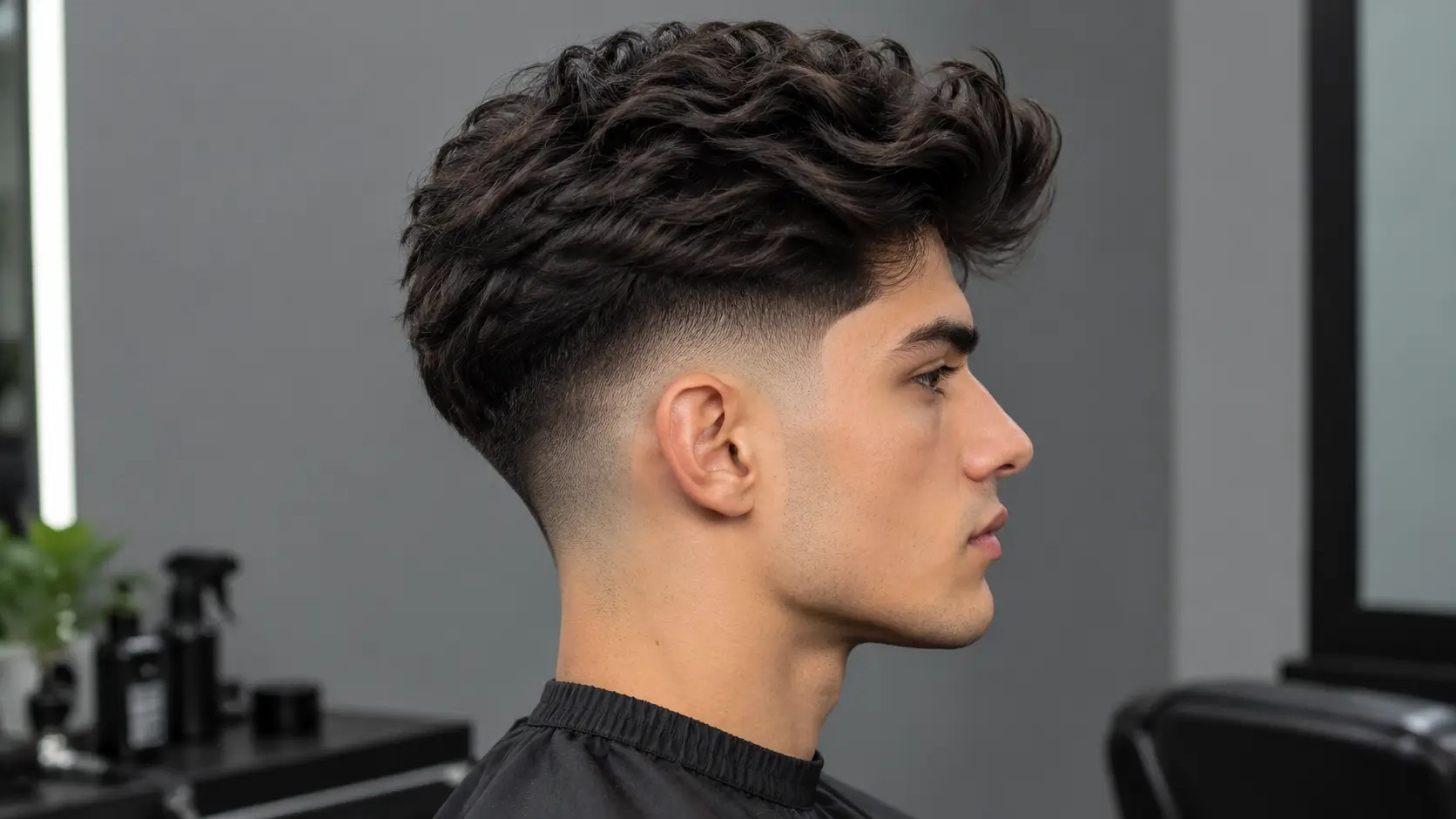
A blowout taper fade combines two things: a tapered fade around the sides and back, and extra length and bulk left on top and toward the crown, styled so it lifts or “blows out” instead of lying flat. The fade itself usually sits low or mid; it’s not a full skin fade wrapping the whole head.
What makes it a “blowout” rather than a standard taper is the styling. The top is kept long enough to blow-dry upward and outward, giving a rounder, fuller silhouette. Barbers on industry forums often note that the name has floated around for decades under different labels (some older barbers called a similar shape a “Brooklyn” back in the ’90s) it’s the same core idea rebranded for a new generation of clients discovering it through short-form video.
Blowout Taper Fade vs. Low Taper vs. Regular Taper Fade
This distinction causes more confusion inside barbershops than almost any other haircut naming issue. Here’s the practical breakdown:
Low taper fade
- Fades only the sideburns and the bottom of the neckline
- Follows the head’s natural shape without adding width
- Grows out cleanly, often stretching 4–5 weeks between visits
- Low daily maintenance
Blowout taper
- Uses a low or mid taper on the sides, but keeps deliberate bulk and length around the back and crown
- The back flares outward rather than following the head’s natural taper
- Needs daily styling effort blow-drying, texturizing paste, or mousse to hold the shape
- Works especially well on wavy, curly, or thick hair
Regular taper fade
- A gradual, even length change rather than a dramatic drop to skin
- Leaves hair longer overall and is generally considered the more “professional” or conservative option
One barber community thread put it simply: a taper reads as more professional, while a blowout reads as a bolder, styled-out look; the two aren’t interchangeable even though clients often ask for one while describing the other.
How Barbers Actually Cut It (Step-by-Step)
Most of the online tutorials rush through the fade and barely touch the technique that actually makes a blowout taper work: blending the bulk behind the ear and through the crown without flattening the volume you’re trying to keep. Here’s the process barbers commonly describe using:
- Set your baseline. Use a trimmer or clipper on an open lever to establish a curved guideline around the sideburns (the “C-cup” area) and the lower neckline.
- Debulk with clipper-over-comb. This is the most commonly recommended technique for blending behind the ear; many barbers find it more reliable than guards alone, since guard work can leave patchiness in that tricky curved area. Comb the hair up and out at an angle, following the shape of the skull rather than floating straight up, which is a common beginner mistake that removes too much length too fast.
- Build ascending guard sizes. Moving from a lower guard near the fade line up through larger guards (commonly something like a 1 into a 2, then blending upward) creates the graduated look rather than a hard line.
- Do scissor work on top before finishing the fade. Several experienced barbers cut and blend the top first with scissors, then bring the clipper work up to meet it; this makes the transition between the bulky top and the fade far easier to blend cleanly.
- Detail and connect. Use blending shears or clipper-over-comb to connect the shorter, faded sides to the heavier hair above. This is the step most tutorials skip, but it’s what prevents a visible “step” between the two textures.
- Style while damp, then finish dry. Apply a styling product, then blow-dry the top upward and forward using a diffuser or brush on low-to-medium heat to lock in the lifted, voluminous shape.
Blowout Taper Fade by Fade Height
Low Blowout Taper
The fade starts tight around the sideburns and low behind the ear, giving the most subtle, versatile base. This is the easiest version to keep looking professional between styling sessions.
Mid Blowout Taper
The fade starts around the middle of the ear, creating more visible contrast between the faded sides and the voluminous top. This is currently the most requested variation, though barbers frequently disagree in comments about where exactly “mid” starts versus a low or high taper, a sign the terminology itself is still settling.
High Blowout Taper
The fade begins higher on the head, creating the boldest contrast and the most dramatic lift on top. This version demands the most upkeep since regrowth shows fastest at this height.
Blowout Taper Fade by Hair Type
Straight Hair
Straight hair needs the most product and technique to hold a blowout shape, since it has the least natural lift. A texturizing spray plus a round brush while blow-drying helps create the volume that curlier textures get more naturally. Barbers note this version tends to need touch-ups sooner because flat hair falls out of shape faster than textured hair.
Curly Hair
Curly hair holds the blowout’s volume with less product work, but it needs careful debulking so the curls don’t read as heavy or shapeless. A rounded, voluminous top that lets curls stay full works best paired with a fade that stays low and quiet near the ears keeping the contrast clean without fighting the curl pattern.
Wavy Hair
Wavy hair sits in between it holds shape better than straight hair but needs slightly more structure than curly hair to avoid looking messy rather than intentionally voluminous. A light sea salt spray is commonly recommended here to enhance texture without weighing the wave down.
Blowout Taper Fade with a Textured Fringe
Pairing the blowout taper with a textured, choppy fringe at the front is one of the most popular current variations, especially for straight or fine hair that needs help holding shape. The fringe is cut with point-cutting or texturizing shears to remove weight without shortening the overall length, which lets it sit forward with movement instead of flopping flat. This combination pairs particularly well with a low or mid fade, since a high fade next to a heavy fringe can look disconnected.
Styling & Maintenance
Unlike a plain low taper, a blowout taper is not a low-maintenance haircut that is worth setting expectations on before the cut, not after.
Daily styling basics:
- Apply a sea salt spray or light mousse to damp hair for texture and grip
- Blow-dry upward and outward using a diffuser or paddle brush, working from the roots
- Finish with a matte clay or texturizing paste for hold without shine
Realistic maintenance expectations:
- The style typically needs re-styling daily, since it won’t hold its lifted shape overnight the way a shorter cut would
- Regrowth at the fade line shows faster on mid and high variations than on low ones
- Clients with very fine or thin, straight hair often need to reapply product mid-day to maintain lift
Who It Suits Best
The blowout taper’s added volume on top makes it particularly effective for:
- Flatter head shapes, where the extra crown height adds dimension
- Rounder face shapes, where vertical lift on top helps elongate the overall look
- Thicker or coarser hair textures, which hold the shape with less daily styling effort than fine, straight hair
It’s a less natural fit for very fine, thin hair without regular product use, since the style relies on volume that fine hair doesn’t hold on its own.
Frequently Asked Questions
Is a taper fade the same as a blowout?
No. A taper fade on its own refers to the gradual blend on the sides and back. A blowout specifically describes the styling leaving extra length on top and back, then blow-drying it upward for volume. Every blowout taper includes a taper fade, but not every taper fade is styled as a blowout.
What’s the difference between a blowout taper and a low taper?
A low taper fades only the tight areas around the sideburns and neckline while keeping the rest of the head close to its natural length, requiring little daily styling. A blowout taper keeps deliberate extra bulk on top and in the back and needs regular blow-drying and product to maintain its lifted shape.
Is a blowout taper attractive or worth getting?
It comes down to personal style and how much daily styling effort someone is willing to put in. The cut suits people who want a bolder, more voluminous look and don’t mind blow-drying and using product regularly; it’s less suited to anyone who prefers a wash-and-go routine.
How long can you go between cuts with this style?
Because the fade sits low or mid rather than high on the head, regrowth is generally less noticeable than with a high fade, and many people can stretch 3–5 weeks between visits depending on how quickly their hair grows and how sharp they like the fade line kept.
About the Author

Nicola Ebmeyer has spent over nine years in fashion and beauty editorial, covering skincare, aesthetics, and non-surgical treatments for beauty and lifestyle publications before shifting focus to medical aesthetics content. She has interviewed dermatologists and cosmetic injectors extensively and specializes in translating clinical information into clear, honest guides for people considering their first treatment. You can reach Nicola at nicolaebmeyerr@gmail.com.
More from Insight Bullion