

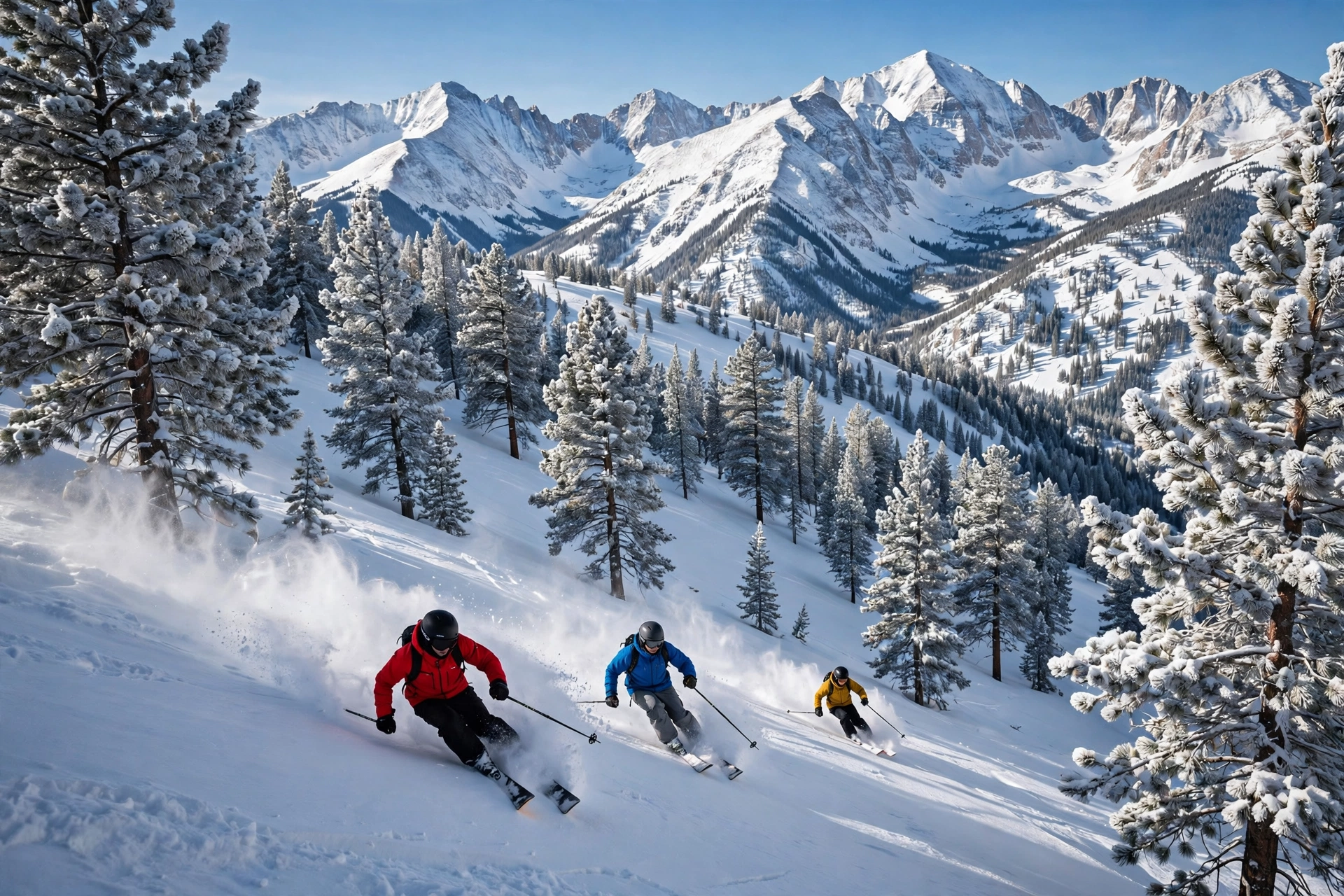
A super El Niño is redrawing the map of where Americans should ski this winter, and the winners are concentrated in the Western US. NOAA’s latest update, issued on 12 November 2026, gives a greater than 79% chance that a strong-to-very-strong El Niño lasts through January to March 2027, with about a 60% chance it becomes the strongest El Niño on record since 1950. The storm track that comes with it is already steering Pacific moisture toward Utah, Colorado, and California, while the Pacific Northwest and the Northeast look drier.
The season is already moving. Arapahoe Basin opened on 28 October, Keystone followed on 30 October, Mammoth Mountain opened eight days early on 5 November, and Vail opened on 13 November. Here are the super El Niño 2026-27 ski destinations with the best snow odds this winter, the resorts to book, and the places to avoid.
What NOAA Is Actually Forecasting
El Niño is the periodic warming of surface waters in the central and eastern Pacific Ocean, and it shifts the jet stream southward, routing Pacific storm systems toward California, Nevada, Utah, and the central and southern Rockies rather than their usual Pacific Northwest and northern track. In a very strong event, those effects intensify. NOAA’s Climate Prediction Center has had an El Niño Advisory in place since 11 June 2026, and its 12 November ENSO discussion says El Niño continues to strengthen before it begins to weaken in early 2027.
The numbers behind the forecast are striking. The Niño-3.4 index, the headline measure of Pacific warming, has reached +2.5°C, with Niño-3 at +3.6°C and Niño-1+2 at +4.4°C. The chance of a historic event, defined as a three-month Relative Oceanic Niño Index of +2.5°C or more, is now about 60% for both the October to December and November to January periods, down from 83% and 70% in the 8 October assessment, but still better than even odds. The next CPC discussion is scheduled for 10 December 2026.
NOAA adds an important caution: even with a very strong El Niño, the chances of experiencing typical El Niño impacts are higher, though not guaranteed. Every El Niño is different, and the exact impacts depend on the strength, duration, timing, and evolution of the event. That is the honest frame for everything that follows.
Where the Snow Is Forecast to Land
The pattern favours the south. Forecasters expect above-normal snowfall for Utah and southern Colorado this winter, with the High Sierra, southern Utah, and New Mexico also in the favoured zone. OpenSnow’s 2026-27 winter forecast, which studied past strong El Niño winters including 1982-83, 1997-98, and 2015-16, favours above-normal snowfall for Colorado’s southern and eastern mountains, and Telluride sits squarely in that zone. The central mountains, home to Vail, Beaver Creek, Aspen, and Breckenridge, sit closer to an even chance, which still means good skiing.
Utah’s strongest signal falls from January through March. Ski Utah meteorologist Evan Thayer describes a familiar El Niño rhythm in his outlook for the season, with the Wasatch picking up its best snow in the heart of winter. The desert Southwest, which benefits directly from the southward storm track, gets this forecast’s most consistent advantage.
The early evidence already points that way. According to the National Weather Service, the season so far has seen multiple feet of snow fall through the San Juan Mountains, as well as through the Central and Northern Rockies and the Sierras, and the snow water equivalent across much of the West is well above average. Areas of Colorado, California, Utah, Wyoming, and Montana have seen the highest snowfall totals since the season began.
The losers are clear too. Travellers who normally book the Pacific Northwest face meaningfully drier and warmer conditions this winter: Washington’s Stevens Pass and Crystal Mountain and Oregon’s Mt. Hood resorts all sit in the disfavoured zone, though Whistler Blackcomb’s higher elevation offers some protection. Montana and Idaho resorts, including Big Sky and Sun Valley, fall into the same zone, and NOAA’s outlook points the bulk of Pacific moisture away from the Northern Rockies. Wyoming sits in an ambiguous zone, with Jackson Hole possibly benefiting from its proximity to the Colorado and Utah corridor during storm sequences.
There is one more catch, and it matters for booking: elevation. The same atmospheric rivers that bring heavy precipitation to the Sierra Nevada and southern Rockies can deposit rain rather than snow at lower-elevation resort bases, typically below 6,500 to 7,000 feet. High-elevation terrain converts those moisture surges into snowfall far more reliably. Park City’s base sits at 6,900 feet, Mammoth Mountain’s at 7,953 feet, and Alta’s at 8,530 feet. When choosing between resorts this winter, altitude is the tiebreaker.
Utah: Deer Valley’s Biggest Winter Yet
The headline resort of the season is Deer Valley Resort in Park City, Utah. Founded in 1981, Deer Valley will offer a record-breaking 4,500 skiable acres for the first time this season, the most the resort has ever offered. The new Hail Peak Express lift will grant skiers access to 200 acres and seven new runs on Hail Peak, on the resort’s easternmost edge, bringing the mountain to 32 lifts and 209 runs. The resort is targeting a 5 December 2026 opening, conditions permitting.
The expansion is part of Deer Valley’s ongoing Expanded Excellence project, which has more than doubled the upscale resort’s skiable terrain since December 2024. Readers of Condé Nast Traveller named Deer Valley the top ski resort in North America in the publication’s 2026 Readers’ Choice Awards. The resort is also unveiling family-friendly Snow Feature Zones, offering rollers and berms for a mild ski-cross experience, and its ski school, one of the largest in the country with more than 600 instructors, is running three-day ski clinics geared toward women of all levels this season.
There is also a new way in. For the 2026-27 season, Ikon Base Pass holders get three days of access to Deer Valley for the first time, with reservations required. Deer Valley is a skier-only mountain with a limited daily skier count, so those reservations matter.
Park City Mountain, Deer Valley’s neighbour, plans to open on 20 November. “We always see consistency in our top destinations: Aspen Snowmass, Breckenridge, Steamboat, Beaver Creek and Vail [in Colorado] and Park City [in Utah],” said Cat Iwanchuk, a lifelong skier and vice president of business development for Ski.com. Those six resorts are the safe core of any Western US ski trip this winter.
Colorado: The Classics Plus a New Luxury Arrival
Colorado already has the most lifts spinning in the country. Arapahoe Basin opened on 28 October, becoming North America’s first ski resort to open for the season, Keystone opened on 30 October, Copper Mountain opened on 8 November, Breckenridge opened on 11 November, and Vail opened on 13 November. Beaver Creek follows on 25 November, the day before Thanksgiving, and Telluride opens on 26 November.
Telluride deserves special attention this winter. OpenSnow’s forecast puts the San Juans, the range around Telluride and Silverton, squarely in the favoured zone, and its strongest snow window runs through November, March, and April. One quirk of El Niño winters is worth knowing when planning dates: OpenSnow tracked eight snow stations across ten El Niño winters and found November and March ran above normal at every one, while December ran below normal at every one. Book early or late in the season, and treat December as the gamble month.
Keystone has the season’s most interesting new arrival. According to TravelAge West, Kindred Resort in Keystone’s River Run Village brings an upscale, ski-in and ski-out experience to an area not typically synonymous with luxury. The resort features 107 hotel rooms and 95 residences, and its “campfire luxury” ethos means gourmet s’mores around the fire, live music, and apres-ski at the end of the day. This ski season will be Kindred’s first, with a Snow Virgins package designed for novice skiers, night skiing, sleigh rides, ice skating, snowboarding, stargazing, and more. Two oversized hot tubs, a heated outdoor pool, a fitness center, a spa, a kids’ club, and four on-site restaurants top off the experience, and guests can ski Keystone’s mountain or take shuttles to nearby Breckenridge.
California: Mammoth Opened Eight Days Early
Further west, Mammoth Mountain in Mammoth Lakes, California, has already delivered the season’s first surprise. The resort opened on Thursday 5 November, eight days ahead of its originally scheduled 13 November opening, after 9 to 15 inches of fresh snow and ideal snowmaking temperatures. It beat Mt. Rose, which opened on 6 November, to become the first resort to open on the West Coast this season. Opening day ran the Broadway Express and the Lower Panorama Gondola, with access to Broadway, Silver Tip, and Rusty’s.
Mammoth is also where to stay if the forecast holds. According to TravelAge West, Limelight Mammoth is in its second-ever ski season this winter. As the destination’s first new hotel in 19 years, the luxury hotel brings 149 rooms and 15 residences to the region, with live music four nights per week, a fleet of Audi vehicles for exploring the Eastern Sierra mountains, ski butlers, and Adventure Architects, the hotel’s adventure-minded concierge team. Its Limelight Live event series returns on 11 December, with rock band Young the Giant headlining.
The High Sierra has the strongest lean toward a big year of any region in the country, and the upper mountains around Lake Tahoe share in it. Palisades Tahoe, Kirkwood, and Heavenly all sit in the favoured zone, and on the Ikon Pass, Mammoth, Palisades Tahoe, and Taos stand out as the best-positioned resorts for this El Niño winter.
The Northeast Should Wait
Travellers looking to ski in the Northeast US should reconsider this winter. The Climate Prediction Center’s El Niño outlook casts an uncertain light on the region, with rainstorms, not snow, a possible outcome this season. The Northeast saw increased demand, up 21.1%, and revenue, up 16.2%, for the 2025-2026 ski season, but previous strong El Niño events have led to well below average snowfall there, and areas of the north are typically warmer, with precipitation close to average.
The exception is further south. Areas of the East that could see some good ski and snow conditions this winter are through the Southern Appalachians and toward the Mid-Atlantic, so ski areas like Sugar Mountain, Snowshoe, and Timberline have a better chance than their northern counterparts of a good ski season. If a Northeast trip is already booked, aim south and aim high.
How to Book a Super El Niño Ski Trip
Winter sports travel is big spending, and this season it is worth spending carefully. New research by Phocuswright shows 45% of winter sports travellers spent $1,500 daily per person, airfare excluded, on a trip in the last 12 months. Only 15% of leisure travellers reported similar spending. Research also shows 66% of US travellers chose a domestic destination for their most recent overnight winter sports trip, and this winter the domestic choice is an easy one.
Book high, book south, and book the right window. Pick resorts with base elevations above 7,000 feet so the storms arrive as snow, favour Utah, southern Colorado, the Sierra Nevada, and New Mexico over the Pacific Northwest and the Northern Rockies, and aim for January through March, when El Niño’s effect on the US is strongest, or for November and March, which historically run above normal in El Niño winters. On the passes, the Ikon Pass favours Mammoth, Palisades Tahoe, and Taos this winter, while the Epic Pass favours Heavenly, Northstar, Kirkwood, and Telluride.
And keep the forecast in perspective. A strong El Niño does not guarantee powder days. The last monster El Niño in 2015-16 did not deliver the way everyone hoped, and the storm track ran further north than expected. A forecast is a lean, not a promise. But with NOAA’s odds above 79%, with lifts already spinning across the West, and with Deer Valley opening its biggest mountain ever on 5 December, this is the winter to point skis at the southern storm track.
Frequently Asked Questions
What is a super El Niño?
A super El Niño is a very strong El Niño event, the periodic warming of surface waters in the central and eastern Pacific Ocean that shifts the jet stream southward. NOAA defines very strong events by a Relative Oceanic Niño Index of +2.0°C or more. The 2026-27 event has about a 60% chance of becoming the strongest El Niño on record since 1950.
Which US ski resorts get the most snow during El Niño?
Strong El Niño winters favour the southern storm track: Utah (Park City, Deer Valley, Alta, Snowbird), southern Colorado (Telluride, Wolf Creek), the High Sierra (Mammoth Mountain, Palisades Tahoe, Kirkwood), and New Mexico (Taos). The Pacific Northwest, the Northern Rockies, and the Northeast lean drier.
When is the best time to ski this winter?
El Niño’s effect on the US is strongest from January through March, and Utah’s strongest snow signal falls in that window. Historically, November and March also run above normal in El Niño winters, while December often runs below normal. Aim for January through March for the best odds.
Is the Northeast bad for skiing this winter?
The Northeast faces a rain-versus-snow gamble this winter, and previous strong El Niño events brought well below average snowfall to Vermont and New Hampshire. The Southern Appalachians, including Sugar Mountain, Snowshoe, and Timberline, have a better chance of a good season.
What is new at Deer Valley this season?
Deer Valley opens its biggest mountain ever on 5 December 2026, with a record 4,500 skiable acres. The new Hail Peak Express lift adds 200 acres and seven new runs, bringing the resort to 32 lifts and 209 runs. Ikon Base Pass holders get three days of access to Deer Valley for the first time.
Will El Niño guarantee powder?
No. NOAA stresses that even a very strong El Niño does not guarantee typical impacts everywhere, and the 2015-16 El Niño disappointed many skiers when the storm track ran further north than expected. High-elevation resorts convert the extra moisture into snow far more reliably than low-elevation ones.
About the Author

Carlo Dibello is a travel writer who builds guides from trips actually taken and places personally tested. Carlo covers city guides, itineraries, food, and budget travel, comparing stays, transport, and attractions on the ground before recommending them, so readers get practical plans rather than generic lists. On Insight Bullion, Carlo’s work includes city things-to-do guides, seasonal trip ideas, and head-to-head travel comparisons.
More from Insight Bullion