
American interest in Sweden is no longer a summer-only story. Visitor numbers are well above pre-pandemic levels, and the most interesting change is not just how many Americans are going — it is when they are choosing to go.
According to figures highlighted by Visit Sweden, Americans generated 1.71 million commercial guest nights in Sweden in 2025. That was an increase of 11% in one year and 58% compared with 2019. The growth did not stop at the end of 2025 either. Americans accounted for more than 743,000 guest nights between June and August 2026, up 10.5% on the previous summer.
Search interest is rising even faster than stays. Stockholm ranked sixth among destinations with the fastest-growing U.S. flight-search interest in Skyscanner’s Travel Trends 2027 report, with searches up 99% year over year. It was the only Nordic destination in the top 10. Flight searches do not always turn into bookings, but in this case the booking and stay figures point in the same direction.
Sweden Beyond The Summer
The clearest shift is seasonal. Forbes, reporting the Visit Sweden figures, notes that around 60% of U.S. guest nights in Sweden during 2025 took place outside June, July and August.
Compared with 2019, American guest nights during those off-season months increased 65%, versus 49% growth during summer. Visit Sweden’s own March 2026 release puts the same pattern in slightly different terms: travel outside the peak season rose 64.6% compared with 2019, outpacing summer growth of 48.5%, while summer still represented around 40% of U.S. guest nights.
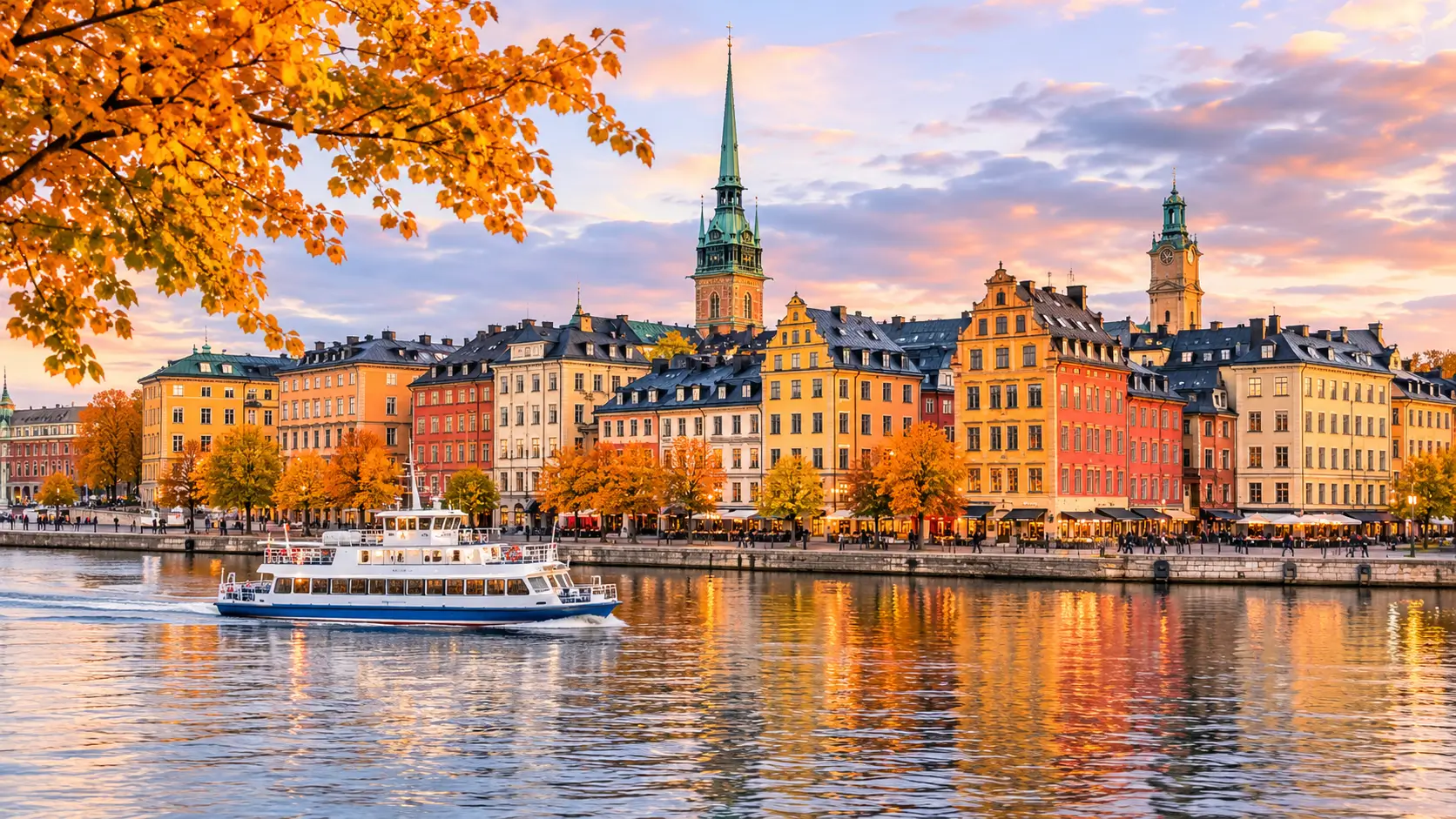
That matters for a northern European country long associated with long summer days and outdoor holidays. Fall now brings foliage and fewer visitors in the cities. Winter brings Christmas markets, snow-based activities and northern lights trips in Arctic Sweden. Spring works well for city breaks before the main European summer period gets underway. The numbers suggest Americans are increasingly comfortable experiencing Sweden at all of those times, not just in July.
Stockholm Leads The Way In Sweden
Stockholm remains the country’s biggest draw for Americans, accounting for more than half of U.S. guest nights in Sweden, according to Visit Sweden. The United States has been Stockholm’s largest international market by hotel guest nights for several years, generating nearly 600,000 guest nights in the city in 2025.
During summer 2026, American visitors accounted for the largest increase among international markets in Stockholm, adding more than 52,000 guest nights compared with the previous summer, according to Stockholm Business Region.
The appeal is easy to understand. The compact centre combines historic streets with major museums and a strong food scene, while the vast archipelago puts thousands of islands within reach of the city. For Americans considering a first trip to Scandinavia, the Swedish capital offers an accessible introduction without an itinerary built around long distances.
Growth is not confined to Stockholm. Visit Sweden says 27% of American guest nights in 2025 took place outside the country’s three biggest metropolitan areas of Stockholm, Gothenburg and Malmö. West Sweden and Skåne in southern Sweden are among the regions attracting the highest numbers of American visitors. In Skåne, the U.S. was the third-largest international tourism market in 2025. The far north is also becoming more prominent, including Arctic destinations Kiruna and Abisko.
Food, Culture and a City Built on Water
Visit Sweden’s research indicates that American travelers considering Sweden are especially interested in city experiences, Swedish culture and lifestyle, and food. Stockholm’s dining scene ranges from traditional Swedish cooking and neighborhood restaurants to internationally acclaimed chefs and global influences.
On October 22, chef Björn Frantzén, whose namesake Stockholm restaurant holds three Michelin stars, was due to open Emberlin, an open-fire restaurant with a more informal approach and an extensive à la carte menu.
The city itself spreads across 14 islands linked by 57 bridges. Roughly one-third of Stockholm is water, one-third is parks and green space, and one-third is urban development. Visitors can explore the medieval streets of Gamla Stan, independent shops and cafés in Södermalm, and museums and parkland on Djurgården. Beyond the city centre, the Stockholm archipelago includes approximately 30,000 islands, islets and skerries, and the Stockholm Archipelago Trail connects hiking routes across 20 islands that can be reached by ferry.
A Capital Where Boats Are Public Transportation
In Stockholm, water is not just scenery. Commuter ferries operate within the public transportation network, connecting waterfront neighborhoods and surrounding communities.
The city is also testing new transportation technology. Swedish company Candela’s fully electric P-12 hydrofoil ferry operates in Stockholm’s public transit system. According to a 2026 evaluation, it shortened one route from approximately 55 minutes to 30 minutes while reducing carbon dioxide emissions by 94 percent compared with diesel vessels.
Nobel Week Lights Up December
Stockholm’s connection to science and innovation takes centre stage during Nobel Week. From December 5 through 13, Nobel Week Lights illuminates streets, squares and public spaces with large-scale installations inspired by Nobel Prize-winning discoveries and ideas.
The free festival leads into the December 10 Nobel Prize ceremony at Stockholm Concert Hall and the banquet at City Hall. For winter visitors, it is a clear example of why Sweden’s appeal now extends well past summer: the season itself becomes the attraction.
Sweden Becomes a Summer Refuge as Coolcation Trend Gains Ground
As global heatwaves push summer travelers to reconsider their usual getaways, so-called coolcations are on the rise — trips to milder destinations instead of blazing heat. Sweden and the Nordics are fast emerging as frontrunners for that shift.
According to luxury travel network Virtuoso, interest in cooler destinations continues to climb, driven by demand for outdoor adventure, climate-conscious travel and wellness-focused getaways. The Nordics in particular saw a 263% year-over-year increase in bookings for summer 2025. Booking.com’s travel predictions for 2025 noted that 42% of global travelers prefer cooler destinations, and 54% plan to increase evening activities to avoid daytime heat.
Sweden, with mild temperatures, long daylight and abundant outdoor activities in uncrowded landscapes, fits that brief closely. Visit Sweden’s April 2026 coolcation release reports that 57% of annual guest nights now occur outside the June–August period, with growth in those off-peak months outpacing the summer season in 2025 compared with 2019.
Sweden’s Summer Allure Matches Climate-Savvy Curiosity
With pristine nature, sustainable experiences and temperatures rarely breaching 25°C in the south, Sweden offers a mix of calm and adventure. Its landscapes stretch from sunlit archipelagos to Arctic tundra, and are a playground for hikers, cyclists, kayakers and culture-seekers alike.
Visit Sweden’s coolcation release puts southern summer temperatures typically between 20–25°C (68–77°F), with cooler conditions in the north. The country also counts more than 100,000 lakes and over 267,000 islands, along with long daylight hours in summer. Together, those factors allow outdoor activities without the constraints of extreme heat or very high visitor density.
Sweden Strikes a Chord with American Travelers
In 2024, overnight stays by American visitors to Sweden rose 8% compared with 2023, making the U.S. Sweden’s fourth-largest international market at that time, after Germany and neighboring Norway and Denmark, according to the Swedish Agency for Economic and Regional Growth.
Interest kept rising, and online behavior supported the trend. The Bloom Consulting Google Demand 2024 report showed a 35% increase in Sweden-related searches from U.S. users — the sharpest growth among all international markets — including a notable uptick in flight queries and travel planning during spring and early summer.
Visit Sweden’s 2024 study found that 88% of U.S. travelers find Sweden appealing, 38% are considering a first-time visit, and 50% are planning to return. A later Visit Sweden release put the return figure similarly high: 89% of U.S. visitors said they were eager to return.
What’s Driving the U.S. Interest in Sweden?
The Visit Sweden findings point to four recurring reasons, not one single cause.
- Nature: Midnight Sun, Northern Lights, islands and archipelagos, forests and mountains, with prime conditions for hiking, kayaking and wildlife spotting.
- Culture and heritage: From Viking history and medieval towns to world-class museums and design culture.
- Culinary curiosity: Seasonal, local and foraged flavors.
- Comfort: A cool climate that supports active adventures all day long.
Climate is part of the story, but it would be simplistic to attribute America’s growing interest in Sweden entirely to the weather. Nature, culture, food and the chance to travel outside peak crowds all appear in the same research.
A Broader Travel Trend Beyond Sweden
Sweden is not alone in attracting more international visitors to northern Europe. Airline SAS reported passenger volumes to Scandinavian destinations up more than 10% year over year, while Sweden, Norway and Denmark all recorded their highest-ever number of tourist overnight stays in 2025.
SAS Chief Commercial Officer Paul Verhagen, quoted in a company release, described it as a shift in how people travel, rather than a shift away from other destinations, pointing to growing interest in nature, space and outdoor experiences as part of what is drawing travelers north.
There is also evidence of a broader shift away from the traditional European summer peak. Luxury travel network Virtuoso reported that bookings to Europe for fall 2026 were up 49%, even as hotel rates increased by more than 7%.
Sweden is particularly well placed to benefit from both trends. The country still receives considerably more American visitors during the warmer months than at any single other time of year. But the gap between summer and the rest of the year is becoming less pronounced — and for Sweden’s tourism industry, that is arguably as important as the overall growth.
What American Travelers Should Know Before Going
Practical planning has not changed as fast as the trend. For U.S. citizens, no visa is required for stays of 90 days or less, and passports must have at least three months’ validity beyond the date of departure, according to the U.S. State Department’s Sweden guidance. Sweden is virtually cashless, so a card or mobile payment is essential, and the Swedish krona (SEK) is the official currency.
On safety, the U.S. State Department’s current Sweden advisory, dated May 18, 2026, is Level 2: Exercise Increased Caution, due to terrorism. That is the second level on a four-level scale. It is not a warning against travel, and Sweden is not on the State Department’s Do Not Travel list. The advisory notes that terrorists may attack with little or no warning, targeting tourist locations, and advises travelers to enroll in the Smart Traveler Enrollment Program (STEP), monitor local media, and review the full advisory before departure.
Frequently Asked Questions
Is Sweden really becoming more popular with Americans, or is this just summer hype?
The stay figures say it is broader than summer. Americans generated 1.71 million commercial guest nights in Sweden in 2025, up 58% on 2019, and most of those nights now fall outside June, July and August.
How much have U.S. searches for Stockholm actually risen?
Stockholm saw a 99% year-over-year increase in flight searches from the United States in Skyscanner’s Travel Trends 2027 report, ranking sixth among destinations with the fastest-growing U.S. search interest.
When is the best time for Americans to visit Sweden if they want to avoid summer crowds?
Fall offers foliage and fewer city visitors, winter offers Christmas markets and northern lights trips, and spring works well for city breaks. Summer remains the busiest single season, but off-season growth is now outpacing summer growth.
What is a coolcation?
A coolcation is a trip to a destination with a milder summer climate, where heat is less intense and outdoor activities remain comfortable throughout the day — the opposite of a traditional hot-summer holiday.
Is Sweden safe for American travelers?
The U.S. State Department rates Sweden Level 2: Exercise Increased Caution due to terrorism, as of May 18, 2026. That means staying alert in crowded tourist areas and following official guidance, not avoiding travel altogether.
Do Americans need a visa for Sweden?
No, for tourist stays of 90 days or less, no visa is required. A passport valid for at least three months beyond departure is required, and travelers should check the State Department’s entry guidance before booking.
ABOUT THE AUTHOR

Carlo Dibello is a travel writer who builds guides from trips actually taken and places personally tested. Carlo covers city guides, itineraries, food, and budget travel, comparing stays, transport, and attractions on the ground before recommending them, so readers get practical plans rather than generic lists. On Insight Bullion, Carlo’s work includes city things-to-do guides, seasonal trip ideas, and head-to-head travel comparisons.
More from Insight Bullion