
Yes, for income, with clear limits. BSR Real Estate Investment Trust pays a 6.1% dividend yield, well above the 4.8% median for residential REITs, and its third-quarter 2026 results show the monthly distribution is covered by cash flow, with the AFFO payout ratio improving to 84.4% from 91.6% in the second quarter. The catch is growth: the trust’s own numbers show same-community income falling, new lease rates down 4.4%, and an independent grader rates its dividend growth as very weak. It is a credible income holding, not a growth story.
The Numbers at a Glance
- Dividend yield: 6.1% as of 16 November 2026, against a 4.8% median for residential REITs, according to AAII.
- Monthly distribution: $0.0467 per unit, or $0.56 a year, paid every month rather than quarterly.
- AFFO payout ratio: 84.4% in the third quarter of 2026, down from 91.6% in the second quarter, according to BSR’s third-quarter results.
- Third-quarter AFFO: $6.4 million, or $0.16 per unit, flat with a year earlier.
- Third-quarter revenue: $34.5 million, up 4.3% from a year earlier.
- Net asset value: $16.10 per unit as of 30 September 2026.
- Debt to gross book value: 52.2% as of 30 September 2026.
- AAII dividend grades: valuation A (deep value), growth F (very weak), strength A (very strong).
- Independent rating: Sure Dividend rates the units a Hold, with a fair value of $11.39 against an $11.12 price at its 27 August 2026 update.
What BSR REIT Is
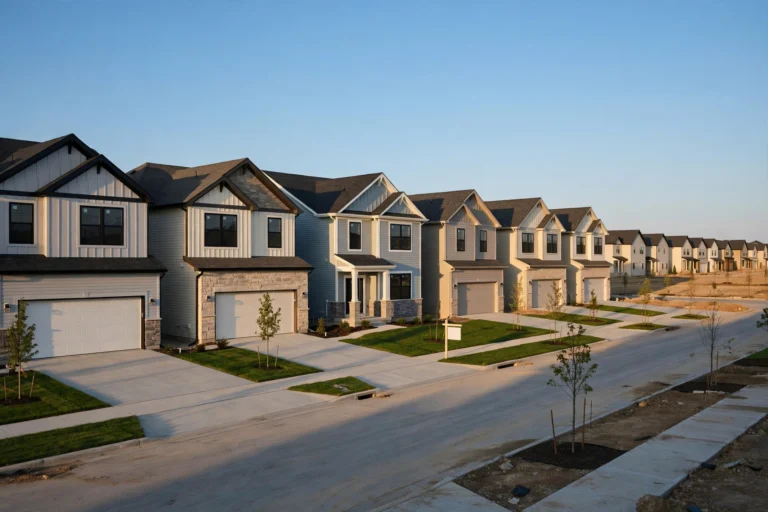
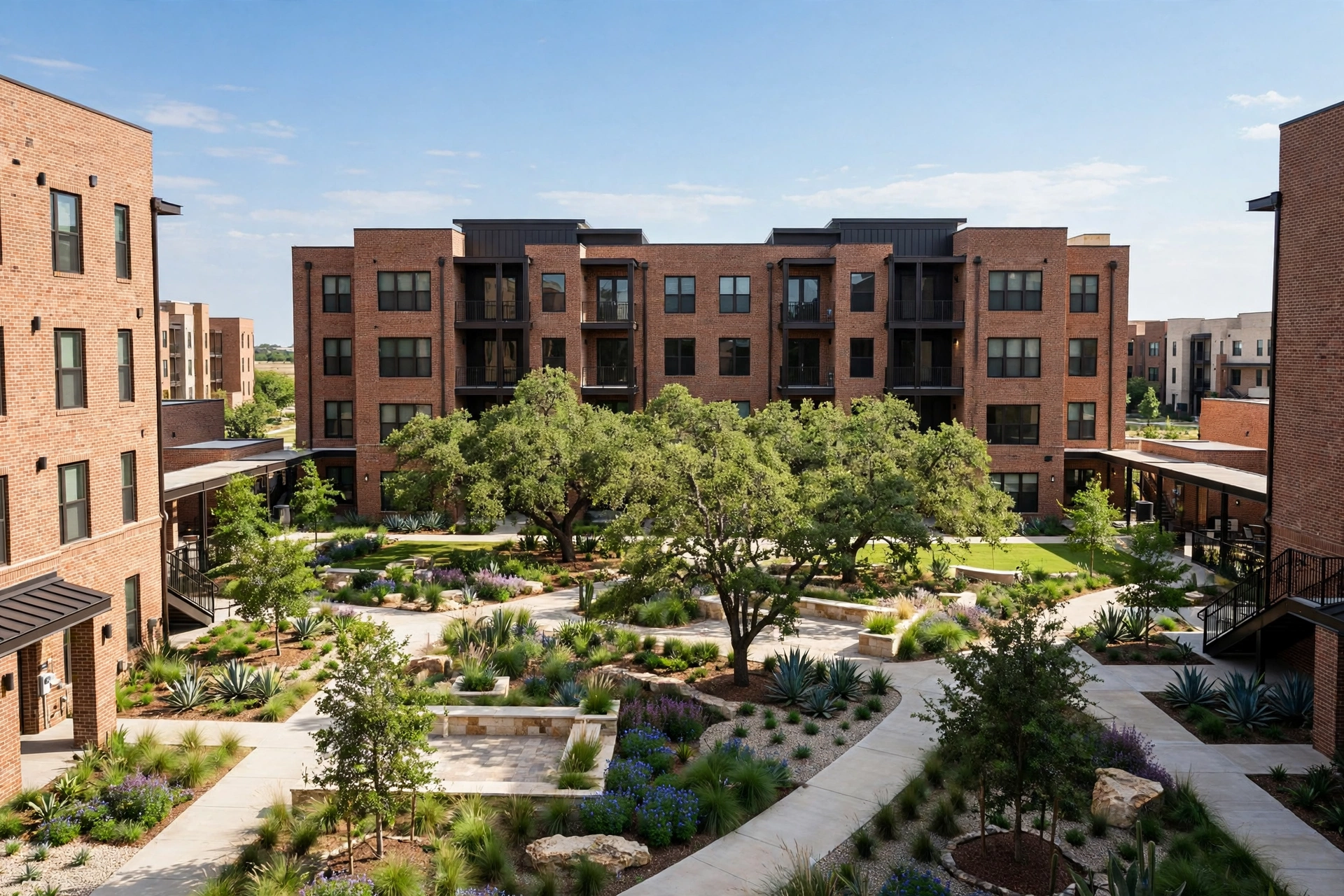
BSR Real Estate Investment Trust is an internally managed, open-ended REIT established under the laws of Ontario, Canada. It owns 26 garden-style apartment communities totalling 7,170 units, concentrated in the Sunbelt region of the United States. Its same-community portfolio of 5,649 units sits in Austin (1,079 units), Dallas (1,381 units) and Houston (2,236 units), with the rest in other markets including Oklahoma City.
The trust only recently became easy for American investors to buy. It registered with the U.S. Securities and Exchange Commission on 30 September 2026 and began trading on the New York Stock Exchange on 14 October 2026 under the ticker BSRT. Its Toronto listing changed at the same time from HOM.UN to BSRT.UN, and its over-the-counter ticker BSRTF stopped trading. American investors therefore trade it as BSRT on the NYSE.
The Dividend in Detail
BSR pays its distribution monthly, at $0.0467 per unit, which works out to $0.56 per unit over a year. At the unit price behind AAII’s 16 November 2026 figures, that is a 6.1% yield. The five-year average yield is 3.9%, so the current yield is high by the trust’s own history, which is partly a sign that the unit price has fallen relative to the payout.
The payout record is short and uneven. Sure Dividend counts three years of dividend growth, and TopDivs’ payment history shows the annual total was cut in 2023 before being raised again. AAII puts the five-year compound annual dividend growth rate at 2.3%. That is why AAII gives the trust a dividend growth grade of F, very weak, even while it grades valuation and strength as A.
One detail matters for tax. BSR classified 100% of its cash distributions in the third quarter of 2026 as a return of capital. That is common for REITs, because depreciation lowers taxable income, but it means the distribution reduces an investor’s cost basis rather than arriving as ordinary dividend income.
Is the Dividend Safe?
For a REIT, the right question is not whether accounting earnings cover the payout. REITs carry large depreciation charges, so the test is adjusted funds from operations, or AFFO, which is the cash left after running the properties and paying for recurring capital work.
On that test, the dividend is covered. BSR declared $5.4 million of distributions in the third quarter of 2026 against $6.4 million of AFFO, a payout ratio of 84.4%. That is an improvement on the 91.6% ratio in the second quarter, when AFFO fell to $5.9 million. Over the first nine months of 2026, the ratio was 86.1%.
The trust’s own guidance points the same way. Management kept its 2026 guidance unchanged in the third-quarter release: AFFO of $0.66 to $0.71 per unit for the full year. Against the $0.56 annual distribution, that implies a full-year payout ratio of roughly 79% to 85%. The distribution fits inside expected cash flow, with room to spare, but not a wide margin.
The balance sheet does not threaten the payout in the near term. Debt to gross book value was 52.2% at 30 September 2026, total borrowings were $730.9 million, and liquidity was $59.9 million. All of the debt is fixed rate or hedged to fixed rates, at a weighted average rate of 4.1%, so higher interest rates do not immediately raise the trust’s borrowing costs. Sure Dividend still gives the dividend a risk score of F, its lowest, which reflects the short growth record and the thin payout cushion rather than an imminent cut.
What the Third Quarter of 2026 Showed
BSR reported its third-quarter results on 11 November 2026, and the picture is mixed. Total revenue rose 4.3% to $34.5 million, helped by properties bought in August 2025 that are still leasing up. Total net operating income rose 2.4% to $17.7 million. Funds from operations were $7.4 million, or $0.19 per unit, and AFFO was $6.4 million, or $0.16 per unit, essentially flat with the third quarter of 2025.
The same-community portfolio, the properties BSR has owned throughout both periods, went backwards. Same-community revenue fell 0.6% to $26.4 million and same-community net operating income fell 4.5% to $13.7 million. Houston was the weak spot: its net operating income fell 16.0% to $5.5 million. Austin’s rose 12.6% to $3.0 million and Dallas was flat.
Rents explain the pressure. New lease rates fell 4.4% in the quarter while renewal rates rose 2.6%, for a blended change of 0.2% lower. Occupancy held up at 94.0% across the portfolio and 94.1% in the same-community portfolio, and the retention rate reached a record 60.3%, so tenants are staying. The problem is that new tenants are signing at lower rents than the tenants they replace.
The reported net loss of $8.1 million, against net income of $2.9 million a year earlier, looks alarming but is not the right measure for a REIT dividend. BSR says the swing comes from non-cash fair value adjustments to derivatives, financial liabilities and investment properties, and that the figure is not comparable period to period. The cash measures, FFO and AFFO, are the ones that pay the distribution, and both were steady.
Valuation: Cheap, but for a Reason
AAII’s dividend valuation grade of A, deep value, says the yield is high relative to the trust’s own history. Sure Dividend’s numbers tell a similar story: at its 27 August 2026 update, the units traded at $11.12 against a fair value estimate of $11.39, and it projected a 10.6% annual total return over five years from the 5.0% yield at that price, 6.0% annual AFFO growth and a small valuation gain. It still rated the units only a Hold.
The discount has a reason. Net asset value was $16.10 per unit at 30 September 2026, down from $16.43 at the end of 2025 and $16.62 a year earlier. A unit price near $9 to $11 therefore trades well below the value of the underlying properties, which is normal for a small REIT with falling same-community income and a payout ratio in the mid-80s. The market is pricing in the weak operating trend, not missing a bargain.
The Risks
The payout cushion is thin. An 84.4% AFFO payout ratio leaves little room if occupancy slips or expenses rise further. The second quarter showed how fast it can tighten: the ratio hit 91.6% when AFFO dipped to $0.15 per unit.
Same-community income is falling. A 4.5% drop in same-community net operating income, with Houston down 16.0%, is the core operating problem. Management expects blended lease rates to improve as new supply is absorbed, but that is a forecast, not a result.
Leverage is on the high side. Debt to gross book value of 52.2% is workable for a REIT with fixed-rate debt, and AInvest notes it is within REIT norms, but it is high for a small operator, and it limits how much the trust can borrow to fund growth or cover a shortfall.
Growth is weak by every measure. AAII’s growth grade is F, the five-year dividend growth rate is 2.3%, and the annual distribution was cut in 2023. Investors buying for rising income are buying the wrong stock.
It is a small, newly U.S.-listed trust. With a market value around $314 million to $435 million depending on the date and the price used, and a NYSE listing only weeks old, the units are likely to be more volatile and less liquid than larger residential REITs.
The Bottom Line
BSR Real Estate Investment Trust is a reasonable dividend stock for an investor who wants monthly income from apartments and accepts the risks. The 6.1% yield is real, it is well above the residential REIT median of 4.8%, and the third-quarter results show the distribution covered by cash flow at an 84.4% AFFO payout ratio, with full-year guidance implying a similar ratio. The NYSE listing in October 2026 also makes the units easier for American investors to own than they were before.
It is not a buy for dividend growth. The growth grade is F, the payout was cut in 2023, same-community income fell 4.5% in the third quarter, and new lease rates dropped 4.4%. The units look cheap against net asset value of $16.10, but the discount reflects those operating trends. Income investors can own it for the yield; anyone expecting the payout to grow steadily should look elsewhere. This article is not investment advice, and anyone considering the units should read the trust’s own third-quarter release and filings first.
Figures in this article come from the sources linked in the text: BSR Real Estate Investment Trust’s third-quarter 2026 results, released 11 November 2026 and carried by PR Newswire and Morningstar, for revenue, NOI, FFO, AFFO, payout ratios, occupancy, lease rates, debt and guidance; AAII for the 6.1% yield, industry median, five-year yield average, dividend growth rate and dividend grades as of 16 November 2026; Sure Dividend for the Hold rating, fair value, price and dividend risk score at its 27 August 2026 update; TopDivs for the monthly payment schedule, annual distribution and payout history; and AInvest for the second-quarter 2026 payout ratio and portfolio detail. AAII’s article on BSR, “Is BSR Real Estate Investment Trust (BSRT) a Good Dividend Stock?”, first flagged the story.
Frequently Asked Questions
What is BSR Real Estate Investment Trust’s dividend yield?
As of 16 November 2026, AAII put the yield at 6.1%, against a 4.8% median for residential REITs. The yield moves with the unit price: Sure Dividend recorded 5.0% at a price of $11.12 in its 27 August 2026 update, and TopDivs recorded 6.08% at a price of $9.23. The annual distribution is $0.56 per unit in both cases.
How often does BSR REIT pay its dividend?
Monthly. The trust pays $0.0467 per unit each month, which totals $0.56 per unit over a year. The distribution is paid on the trust’s units, which trade on the NYSE as BSRT and on the Toronto Stock Exchange as BSRT.UN.
Is BSR REIT’s dividend safe?
It is covered, but the cushion is thin. The AFFO payout ratio was 84.4% in the third quarter of 2026, improved from 91.6% in the second quarter, and the trust’s full-year 2026 AFFO guidance of $0.66 to $0.71 per unit implies a full-year payout ratio of roughly 79% to 85% against the $0.56 distribution. AAII grades dividend strength as A, very strong, while Sure Dividend gives the dividend a risk score of F, its lowest, reflecting the short growth record and the thin cushion.
Why did BSR REIT report a loss in the third quarter of 2026?
The $8.1 million net loss came mainly from non-cash fair value adjustments to derivatives, financial liabilities and investment properties, according to the trust’s own release. The cash measures that fund the distribution were steady: funds from operations were $7.4 million and adjusted funds from operations were $6.4 million, both close to a year earlier.
What is BSR REIT’s ticker symbol?
BSRT on the New York Stock Exchange, where the units began trading on 14 October 2026, and BSRT.UN on the Toronto Stock Exchange. The trust registered with the U.S. Securities and Exchange Commission on 30 September 2026. Its former over-the-counter ticker, BSRTF, stopped trading when the NYSE listing began.
Is BSR REIT a good dividend stock for growth?
No, not on the current evidence. AAII gives it a dividend growth grade of F, very weak, the five-year dividend growth rate is 2.3%, and the annual distribution was cut in 2023. The case for owning it is the 6.1% yield and the monthly payment, not rising income.
About the Author

Andy Abramson
Andy Abramson writes about luxury real estate, waterfront communities, and high-end lifestyle destinations. Andy’s guides focus on the detail behind a property, not just the listing: property records by address, name, and folio, closing timelines by loan type and state, and deeds and transfer rules checked against official sources, public records, and major news outlets. Andy also fact-checks high-profile homes and luxury rankings before publishing.
More from Insight Bullion