
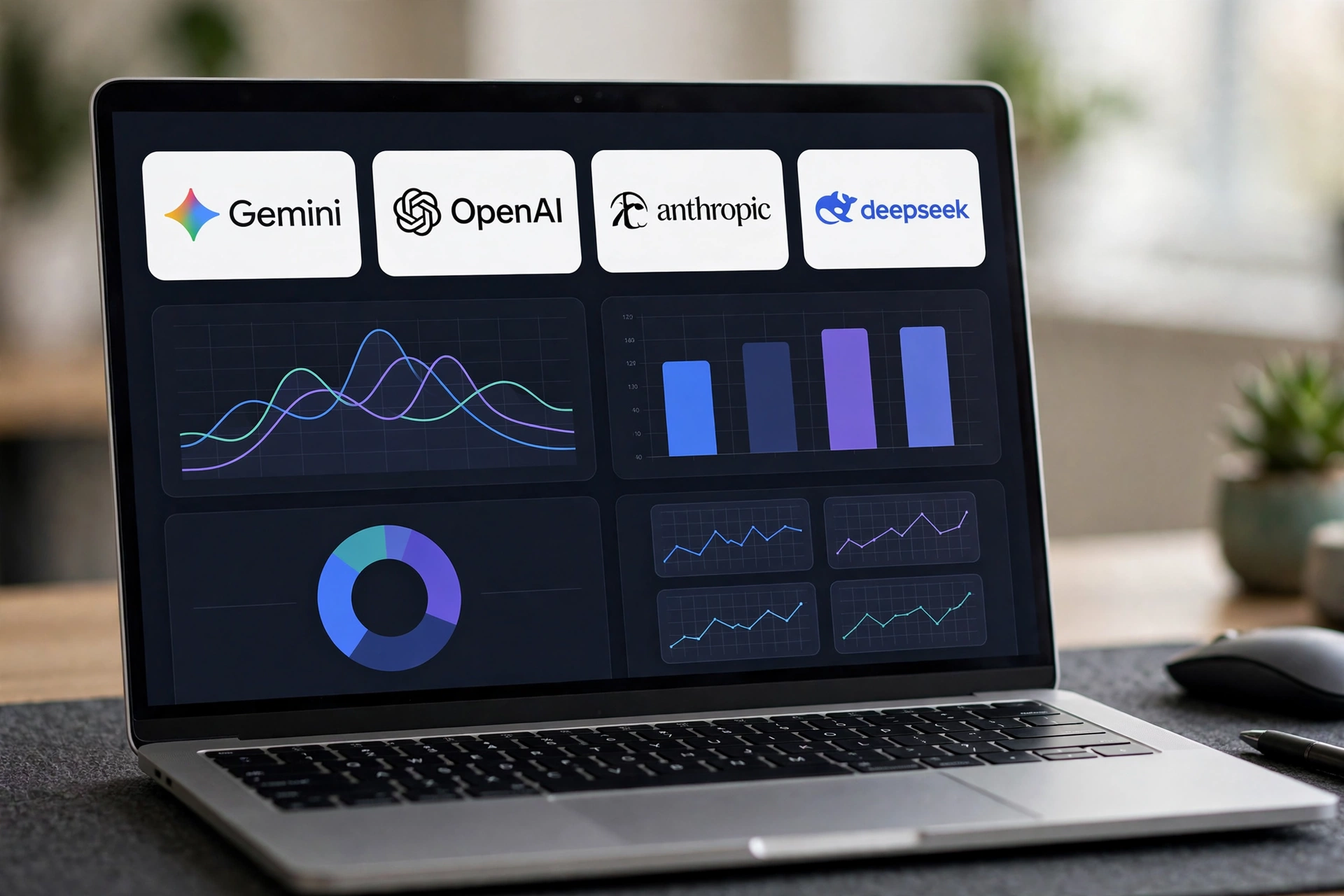
Google is about to make its flagship AI model twice as expensive to call. Gemini 4 Argon, which launched on October 13, 2026 at $2 per million input tokens and $10 per million output tokens, moves to $4 and $20 on December 1, when its introductory rate ends. The change was confirmed on Google’s own pricing page and reported by Tech Insider and Dawloom, which both read the vendor pricing pages directly.
That matters because Argon is not a niche model. It is Google’s frontier model for developers and enterprises, available through the Gemini API, Google AI Studio, Google Cloud and the Antigravity desktop app, and it is generally available in Snowflake AI Functions since November 3. Any team that built on it during its first seven weeks now faces a price rise, with two weeks to decide whether to stay, switch or split the workload.
This article sets out the new price, how Argon compares with the three models most teams would switch to, what a real monthly bill looks like on each, and what to check before December 1.
The Price Change at a Glance
| Model | Vendor | Input per 1M tokens | Output per 1M tokens | What changes |
|---|---|---|---|---|
| Gemini 4 Argon (to Nov 30) | $2 | $10 | Introductory rate | |
| Gemini 4 Argon (from Dec 1) | $4 | $20 | Standard rate, double the intro price | |
| GPT-6.1 Sol | OpenAI | $2 | $10 | Price cut 50% on Nov 2 vs GPT-5.6 promotional pricing |
| Claude Opus 5.5 | Anthropic | $4 | $20 | 20% below Opus 5 at $5 and $25 |
| DeepSeek V4.1 Flash (peak) | DeepSeek | $0.30 | $1.20 | Off-peak is half price |
Read the ratios and the picture sharpens. From December 1, Argon costs exactly twice as much as GPT-6.1 Sol on both input and output, exactly the same as Claude Opus 5.5, and 13 times DeepSeek’s peak input price and nearly 17 times its peak output price. Until November 30, Argon and Sol cost exactly the same, which is why the deadline matters: the same traffic costs double from one day to the next, with no change in quality.
Cached input tokens get a 95% discount on Argon at both price points, so a cached input token costs $0.10 today and $0.20 from December. That matches OpenAI’s $0.10 cached rate for Sol today, but not after December, when Argon’s cached rate doubles with the rest.
The Full Price Table: Every Tier, Not Just the Flagships
The four models above are the headline comparison, but most real workloads do not run on flagship models. The cheap tier and the mid tier are where the money is saved. All prices below are USD per million tokens at standard paid-API rates, checked on the official pricing pages of OpenAI, Anthropic, Google and DeepSeek by Dawloom on October 13 and October 21, and cross-checked against Tech Insider’s November 9 fetch.
| Model | Input | Cached input | Output | 1,000 tasks |
|---|---|---|---|---|
| GPT-6 Luna (OpenAI) | $0.10 | $0.01 | $0.50 | $0.45 |
| Claude Haiku 5.5 (Anthropic) | $0.10 | $0.01 | $0.50 | $0.58 |
| DeepSeek V4.1 Flash, peak (DeepSeek) | $0.30 | $0.006 | $1.20 | $1.20 |
| Gemini 3.1 Flash-Lite (Google) | $0.25 | $0.025 | $1.50 | $1.25 |
| Gemini 3.5 Flash-Lite (Google) | $0.30 | $0.03 | $2.50 | $1.85 |
| DeepSeek V4 Pro, peak (DeepSeek) | $1.32 | $0.044 | $3.96 | $4.62 |
| Gemini 3.8 Flash, 2026 price (Google) | $0.75 | $0.075 | $3.75 | $3.38 |
| Gemini 3.8 Flash, from Jan 1 2027 (Google) | $1.50 | $0.15 | $7.50 | $6.75 |
| GPT-6.1 Sol (OpenAI) | $2 | $0.10 | $10 | $9.00 |
| Gemini 4 Argon, to Nov 30 (Google) | $2 | $0.10 | $10 | $9.00 |
| Gemini 3.1 Pro, preview (Google) | $2 | $0.20 | $12 | $10.00 |
| Claude Sonnet 5.5 (Anthropic) | $2 | $0.10 | $10 | $11.70 |
| Gemini 4 Argon, from Dec 1 (Google) | $4 | $0.20 | $20 | $18.00 |
| Claude Opus 5.5 (Anthropic) | $4 | $0.20 | $20 | $23.40 |
| GPT-6 Astra (OpenAI) | $10 | $1 | $50 | $45.00 |
| Claude Fable 5.1 (Anthropic) | $10 | $0.25 | $50 | $58.50 |
“1,000 tasks” means 1,000 calls of 2,000 input tokens and 500 output tokens at the standard rate, with no caching. Two rows deserve a note. Claude Sonnet 5.5 and GPT-6.1 Sol share a $2 and $10 list price, but the same task costs about $11.70 on Sonnet and $9 on Sol, because Anthropic’s pricing page says Claude models from version 4.7 use a tokenizer that produces about 30% more tokens for the same text. Opus 5.5 and Fable 5.1 carry the same adjustment, which is why their task costs run above their list-price equivalents.
There is a second Gemini price rise hiding behind the first. Gemini 3.8 Flash, the fast model many teams use for everyday work, costs $0.75 input and $3.75 output through December 31, 2026, then doubles to $1.50 and $7.50 from January 1, 2027. Google prints both numbers on its pricing page. Any budget built on the 2026 Flash price needs updating twice in five weeks.
What a Real Monthly Bill Looks Like
List prices hide the real number, so here are three illustrative workloads run through the list prices above, using the worked examples from Tech Insider. The volumes are assumptions picked to resemble common team setups. The arithmetic uses only the list prices. It excludes tax, currency conversion, rate-limit tiers, retries and reasoning tokens.
Workload A: a support assistant burning 100 million input tokens and 20 million output tokens a month. On Argon today that costs $400. From December 1 it costs $800, a $400 monthly increase, or $4,800 a year, with zero change in quality. GPT-6.1 Sol holds at $400. Opus 5.5 costs $800. DeepSeek handles it for $54 at peak rates and $27 off-peak, roughly one-fifteenth and one-thirtieth of Argon’s December bill.
Workload B: a retrieval-heavy app with 500 million input tokens, 80% of them served from cache, plus 50 million output tokens. Argon and Sol both land at $740 today, because a 95% cache discount on Argon’s $2 input equals Sol’s $0.10 cached rate. After December 1 the cached share on Argon costs $0.20 per million instead, and the uncached input and the output both double, so the total hits $1,480.
Workload C: an overnight document pipeline at 200 million input and 40 million output tokens. Argon goes from $800 to $1,600 on December 1. Sol stays at $800, and OpenAI’s Batch API halves that to $400 for work that can wait up to 24 hours. DeepSeek costs $108 at peak and $54 off-peak. Argon has no batch discount confirmed in the sources reviewed, so an overnight pipeline on Argon doubles with no offsetting lever.
Why the Sticker Price Misleads
Four things matter more than the per-token list price, and every comparison table that skips them is misleading.
Caching. When the start of a prompt matches a recent call, you pay the cached rate instead of the full input rate. On Claude Sonnet 5.5 a cache hit costs $0.10 per million against $2 for fresh input. On DeepSeek it costs $0.006 at peak, 2% of the input price, the lowest ratio in the table. But prompts below a minimum length are not cached: 512 tokens on current Claude models, 1,024 on OpenAI, and 4,096 on Gemini 4 Argon and 3.8 Flash. Google charges no cache-write premium but bills explicit cache storage by the hour, for example $0.50 per million tokens per hour on Gemini 3.8 Flash.
Batch and off-peak discounts. Batch halves the input and output price on every Anthropic, OpenAI and Google model in the table, if you can wait for the result. DeepSeek has no batch tier but charges half price off-peak. Its peak hours are 01:00 to 04:00 and 06:00 to 10:00 UTC, Monday through Friday, excluding Chinese public holidays, so a standard business-hours workload in the Americas or Europe mostly pays the off-peak rate.
Long prompts. OpenAI’s model pages say prompts with more than 272,000 input tokens are priced at twice the input and cache rates and 1.5 times the output rate for the full request. Claude Haiku 5.5 jumps to $0.50 input and $2.50 output above 100,000 tokens. Gemini 3.1 Pro in preview goes to $4 and $18 above 200,000 tokens. Claude Fable 5.1, Opus 5.5 and Sonnet 5.5 stay flat to 1 million tokens.
Thinking tokens are output. Google labels its output price as including thinking tokens. OpenAI and Anthropic bill reasoning tokens as output too. A model that thinks for 2,000 tokens before a 500-token answer costs five times the output in the task example above. Anthropic also says Opus 5.5 no longer runs with thinking switched off, so some output spend goes to reasoning whether you want it or not.
What the Benchmarks Actually Say
No source reviewed scores all four models on one shared test, so there is no single leaderboard to quote. Here is what each vendor’s own launch material reports, with the caveat that vendor benchmarks have a known bias, since each lab picks tests it expects to win.
Anthropic reports that Opus 5.5 scores 54.6% on FrontierCode, a test of whether an agent’s code changes would be merged, ahead of GPT-6 Astra’s top score of 53.3%, and says the cost per task was about a fifth of Astra’s. OpenAI’s launch material for GPT-6.1 Sol reports GPT-6 Astra scoring highest among tested models at 68.1% on a scientific research evaluation, and says to use Astra for the hardest science tasks. Google’s launch of Gemini 4 Carbon, Argon’s follow-up, reports 88.2% on SEC-bench Pro, a cybersecurity test, but that score belongs to Carbon, not Argon, and Carbon looked gated in early November.
The FrontierCode row is the most useful one for pricing. A $4 and $20 model that finishes a task in fewer tokens can beat a cheaper-per-token model that wanders. Anthropic says typical workloads on Opus 5.5 cost about 40% less overall than Opus 5, helped by fewer tokens per task. That is why the benchmark section leans on cost per task rather than cost per token.
The Verdict by Use Case
Best overall value among the frontier trio: GPT-6.1 Sol. At $2 and $10 with a 50% batch discount, it undercuts Argon’s December price by half and Opus 5.5’s by half. OpenAI’s own claim of near-Astra intelligence at one-fifth of Astra’s price supports the case, though that claim is vendor-reported. OpenAI also lists a cheaper sibling, GPT-6.1 Terra, at $1 input and $5 output for lighter tasks.
Best for agentic coding: Claude Opus 5.5. Its per-token price equals Argon’s December rate, but the FrontierCode result and the 40% lower typical-workload cost make the higher token price worthwhile, though you should measure on your own repositories. Zero data retention is available, and it runs on the Claude Platform plus AWS, Google Cloud and Azure. Fast mode costs $8 and $40 for up to 2.5x speed.
Best for cost-sensitive volume: DeepSeek V4.1 Flash. At $0.30 and $1.20 at peak and half that off-peak, it costs roughly one-fifteenth of Argon’s December rate on the support-assistant workload. The privacy review is the gate, not the quality: DeepSeek is a Chinese company, and its privacy policy says it collects, processes and stores personal data in China. Read the data terms before sending it customer data, and keep personal data off the model entirely if your review does not clear it.
Gemini 4 Argon: stay only with a reason. Until November 30 it matches Sol on price, so use that window for prototyping and evaluation. After December 1 it needs a reason beyond price, such as Snowflake integration or a cache-heavy design you have already tuned. The December price change turns Argon from a bargain into a premium product.
A mixed setup often wins. A router that sends bulk jobs to DeepSeek, agent work to Opus 5.5 and batch work to Sol can cut a bill sharply without lowering quality where quality matters.
What to Do Before December 1
You have until the end of November. A careful migration takes about two weeks, so start now.
- Inventory your usage. List every service, script and notebook that calls gemini-4-argon. Pull monthly input, cached and output token counts from your billing console.
- Price the December bill. Double the Argon line and add it to your next budget review. That is your baseline for any switching decision.
- Build an evaluation set. Collect 100 to 200 real prompts with known-good outputs, split by task type. Include your hardest 20 cases.
- Add a model gateway. Route calls through a thin abstraction or a gateway such as LiteLLM or Vercel’s AI Gateway so a model swap becomes a config change.
- Shadow-test the candidates. Send copies of production traffic to Sol, Opus 5.5 and DeepSeek V4.1 Flash, and log quality, latency and total tokens per task.
- Canary the cutover. Move 5% of traffic, watch error rates and cost per task for 48 hours, then widen. Keep Argon as a fallback until you finish.
- Lock versions and set alerts. Pin model IDs. Set a budget alert slightly above your forecast and subscribe to deprecation notices from every host you use.
One warning from the DeepSeek side: model naming and routing have shifted several times since September. DeepSeek said that from 04:00 UTC on September 14, all deepseek-v4-pro requests route to V4.1 Flash at V4.1 Flash rates until V4.1 Pro launches, and the older V4 Flash build from July 31 was reportedly retired on November 5. Pin versions, and subscribe to your host’s deprecation feed.
Prices in this article are USD per million tokens at standard paid-API rates, read from the official pricing pages of OpenAI, Anthropic, Google and DeepSeek and cross-checked across Tech Insider, Dawloom, Kunal Vohra and APIdog. Prices change often. Check the vendor pricing pages before you commit a budget.
Frequently Asked Questions
When does the Gemini API price change take effect?
Google’s introductory rate for Gemini 4 Argon ends after November 30, 2026. The standard rate of $4 per million input tokens and $20 per million output tokens applies from December 1, 2026.
How much does Gemini 4 Argon cost after the change?
Google lists $4 per million input tokens and $20 per million output tokens after the introductory period. Cached input tokens receive a 95% discount. Both numbers are double the introductory $2 and $10.
Is GPT-6.1 Sol cheaper than Gemini 4 Argon?
Today they cost the same at $2 input and $10 output. From December 1, Sol is half the price of Argon. OpenAI also lists a 50% batch discount and a 10% data residency surcharge.
What is Claude Opus 5.5 API pricing?
Anthropic lists $4 per million input tokens and $20 per million output tokens, 20% below Opus 5’s $5 and $25. Fast mode costs $8 and $40 for up to 2.5x speed.
What is DeepSeek API pricing for V4.1 Flash?
DeepSeek lists $0.30 input and $1.20 output at peak, and $0.15 and $0.60 off-peak. DeepSeek confirms that off-peak rates are 50% of peak. Check DeepSeek’s live rate card before budgeting.
Is Gemini cheaper than GPT and Claude?
For now, Gemini 4 Argon matches GPT-6.1 Sol and Claude Sonnet 5.5 at $2 and $10. From December 1, 2026, it costs twice as much. Gemini 3.8 Flash at $0.75 and $3.75 is cheaper than the mid tier but costs more than GPT-6 Luna and Claude Haiku 5.5, and it doubles on January 1, 2027.
About the Author

Becky Simms
Becky Simms is a technology writer with 9+ years in consumer electronics, streaming services, and device troubleshooting. Becky verifies tech news and outages against official status pages and verified outage reports, covering service outages, AI products, tech companies, and new technology coverage, and separates what is confirmed from what is still unproven. Becky’s guides show readers how to check a service themselves, right now, instead of relying on rumours.
More from Insight Bullion